Connecting the live music industry
Groundbreaking Artist Data Clause in Live Nation–DOJ Settlement
March13
A provision in the draft settlement between Live Nation Entertainment and the United States Department of Justice is attracting discussion within the live music industry after being highlighted in a recent LinkedIn post by Alec Ellin, CEO of Laylo.
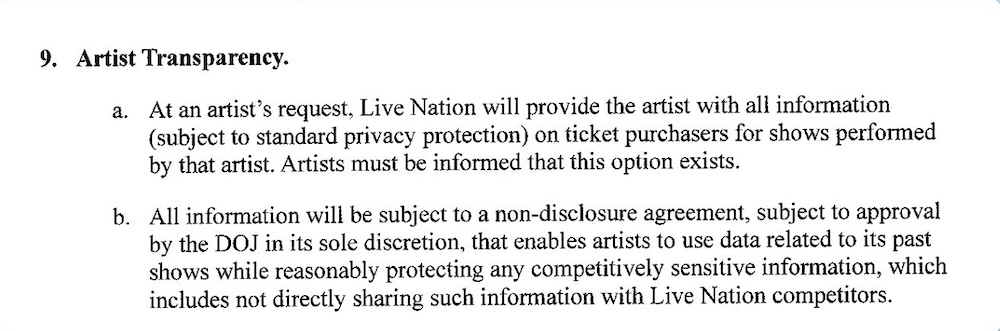
While public attention has largely focused on financial penalties and structural remedies included in the agreement, Ellin pointed to a section referred to as “Clause 9: Artist Transparency” as potentially significant for artists and their teams.
According to the draft settlement terms, Live Nation would be required—upon request from an artist—to provide information about ticket purchasers for that artist’s shows. The provision is expected to operate under standard privacy protections and non-disclosure agreements.
Access to ticket-buyer data
If implemented as outlined, the clause would allow artists to request access to certain fan data collected during ticket purchases for their performances. This could include identifying and contact information for attendees, subject to applicable privacy rules.
Industry observers say such access has historically been limited, with ticketing platforms or promoters typically retaining control over customer data generated through ticket sales.
Ellin argued in his post that the provision could allow artists and their teams to communicate directly with fans who attend their shows, potentially using the information for marketing tours, merchandise or future releases.
Potential operational impact
The clause could also have implications for promoters and venues, who may face increased requests from artists or managers seeking ticket-buyer data linked to their performances.
Some industry professionals believe the provision reflects a broader shift toward greater access to first-party audience data, a trend already visible in sectors such as e-commerce and digital media.
Broader settlement context
The proposed settlement between Live Nation and the Department of Justice follows a lengthy antitrust case concerning the company’s market position in concert promotion and ticketing.
In addition to financial penalties reportedly totaling around $280 million, the agreement is expected to include structural measures such as limits on certain venue exclusivity arrangements and the potential divestiture of several amphitheatres.
It remains unclear whether the proposed artist transparency provision would apply only to the United States or whether similar practices could be implemented in other markets where Live Nation operates. The company runs ticketing and promotion businesses across Europe, Asia-Pacific and Latin America, where data-sharing rules and privacy regulations may differ.
While many of the settlement’s financial and structural elements have drawn the most attention, Ellin suggested that the artist data transparency clause could have longer-term implications for how artists, promoters and platforms manage fan relationships within the live entertainment ecosystem.

With VIP-Booking.com, you can search for anyone in the live music industry - try it yourself!
Search Artists:
Trusted by professionals in the live music industry around the world for 25 years!