Connecting the live music industry
Live Nation verdict raises regulatory pressure on European market
April19
The US jury verdict against Live Nation Entertainment—concluding that the company operates an illegal monopoly—has added new momentum to an ongoing European debate around market concentration, competition and access within the live music sector.
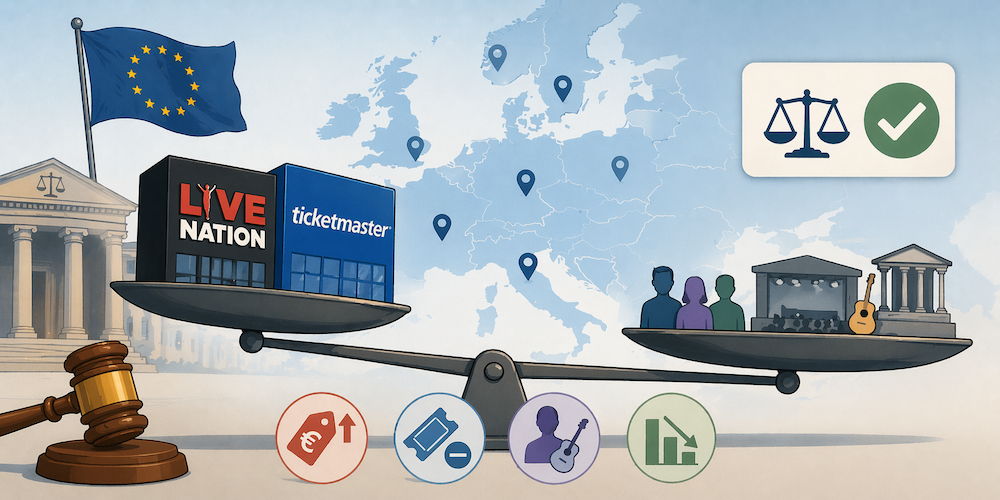
While the ruling has no direct legal impact in Europe, it reinforces concerns that have already been raised by industry organisations, policymakers and independent operators across the region.
Regulators such as the European Commission and the UK’s Competition and Markets Authority are now expected to face increased pressure to examine how vertical integration—particularly involving Ticketmaster—affects competition in European markets.
A central issue is the concentration of power across promotion, ticketing and venue ownership. European network Live DMA has previously highlighted how a limited number of global companies control a significant share of the live ecosystem, raising concerns about access, pricing and diversity.
Calls for structural change echoed across the sector
Following the US verdict, Stephen Parker of the US National Independent Venue Association called for structural remedies, stating that Live Nation and Ticketmaster should be separated and that limits should be placed on the company’s role in ticketing and tour promotion.
Although such measures would require separate legal action in Europe, similar views have been voiced within the region. The Association of Independent Festivals has long argued that Live Nation’s scale and integrated model can restrict competition and reduce opportunities for independent festivals and promoters.
Policy debate around market concentration
At policy level, concerns around market dominance have also been raised in connection with broader cultural and economic impacts. European stakeholders have pointed to the risk that increasing consolidation among a small number of global operators could limit artist development pathways and reduce diversity within the live sector.
These discussions are not new, but the US ruling adds weight to arguments that stronger oversight or intervention may be required. The case is likely to be used as a reference point in ongoing and future competition reviews across Europe.
No immediate change, but rising pressure
In the short term, Live Nation continues to operate across Europe without change and has indicated it will challenge elements of the US ruling. However, the verdict is expected to influence commercial dynamics, with independent promoters, agents and venues potentially gaining leverage in negotiations as scrutiny increases.
For the European B2B live music market, the significance of the ruling lies in its potential to accelerate regulatory attention and reshape the competitive landscape over time. Whether that leads to concrete action will depend on how European authorities respond, but the pressure to act is increasing.

With VIP-Booking.com, you can search for anyone in the live music industry - try it yourself!
Search Artists:

Trusted by professionals in the live music industry around the world for 25 years!